
Lately I’ve been using the +”%y-%V” date format a lot and I wanted a weekday format to optionally append to that (although most of the time the weekly granularity is enough) and landed on MTWRFSU for odd weeks and mtfwrsu for even weeks. I found online that some schools and hospitals use that system for scheduling. It’s good to have biweekly because then I don’t have to dedicate an entire page every week for my todo lists. That reminded me of the Arvelie calendar.
So in the back of a Techō Weeks there’s this “365 Days Check-Off Sheet” that always look like this (even on leap years, which is a bit awkward):
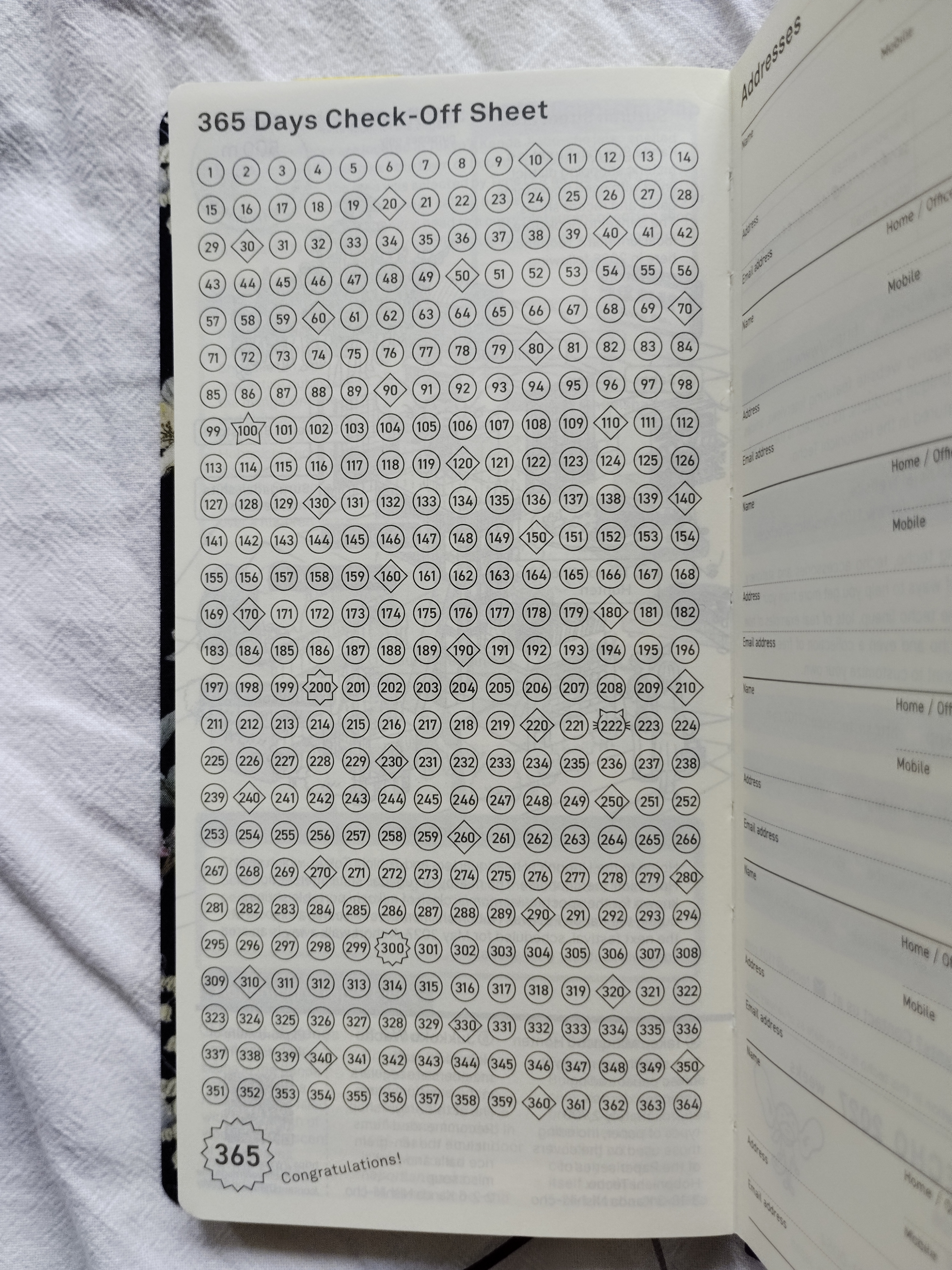
You can use it as an Arvelie calendar converter by adding some letters down one margin and the week numbers down the other.
I went with uppercase MTWRFSU for odd weeks and lowercase mtwrfsu of even weeks. Then I used the ISO week number that corresponds to the entire week being fully contained on that line. So for 2026 that means fields are labeled “RFSUmtwrfsuMTW” across and the weeks are numbered going 2, 4, 6, 8 etc down. The “ABCD etc” vertical lettering is the same every year since the Arvelie calendar doesn’t change year over year, but the weekday label and week number does change. (I looked it up with the help of the monthly spreads at the start of the book. For example in 2027 the first Monday in week 1 starts with January fourth. In 2026, the first full week is week 2 which starts with a lowercase m on January fifth.) For 2027, the fields are labeled “fsuMTWRFSUmtwr” across and the week numbers down go 1, 3, 5 etc. Like this:
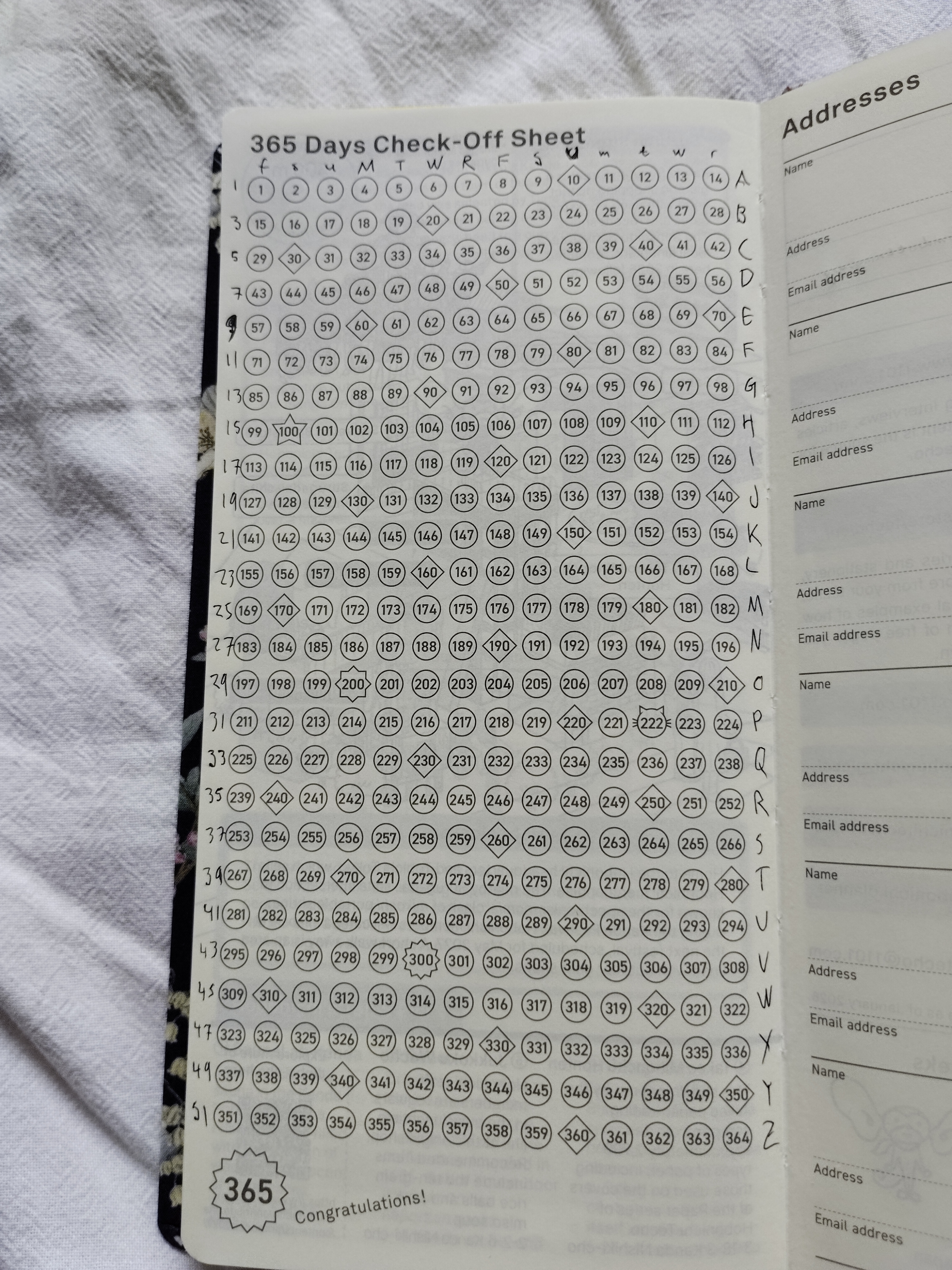
Looking in the calendar on the monthly or weekly spreads you can find your week and the day of that week and that way find your day of the year in the grid. (Bonus if you also wanted to find out the day of the year, like I’m writing this day 268 of 2026 apparently.) Then you can find the Arvelie month letter on that row and to get the date you just count the offsets on the day on that row. (The first row already has 1 through 14 printed but remember that Arevelie is 0–13 so subtract one if you’re looking up there.)
For example let’s say we’re gonna convert April 1st 2027. That is Thursday week 13, an odd week so uppercase T. So find the number crossreferencing T and 13, it’s 91. That number row has G and is the sixth offset from the left so it’s Arvelie G06. Or let’s take an even-week date like April fifth. Looking at the date in the monthly or weekly spreads we see that that is Monday week 14. It’s the nearest lowercase m following week 13 so it’s 95. That is Arvelie date G10. (I don’t really use the 91 number or the 95 number, the position of the number is all that matters, I just noted those here in case you’re following along.)
Find the row corresponding to the Arvelie month, find the weekday and week number by looking at the other letterals corresponding to that number. Then look that day up in the monthly or weekly spreads. For example Arevlie day J11 in the Gregorian year 2027 is 138, and that is the lower case t on the 19 line so it’s Tuesday week 20, which the monthly or weekly spread tells us is the merry merry month of May 18th. Again the number 138 isn’t used in the calculation, it’s just my way to “point to” the right box for anyone following along at home.
But every day becomes mapped to one particular date instead of any 365 days starting on any day, so that’s the trade-off here. You lose some flexibility but gain being able to look up what day particular number belongs to and you can find day of year and, by looking at the alphabet rows, you can find the Arvelie grid.
This doesn’t have to be part of “setting up a new Techō”; since all the info you need to do it is in the book (it’s a calendar, after all) you can do it whenever you want to, for fun, just as long as you brought a pen.