<?xml version="1.0" encoding="UTF-8"?>
<?xml-stylesheet type="text/css" href="https://idiomdrottning.org/feed.css"?>
<feed xmlns="http://www.w3.org/2005/Atom">
  <title>Idiomdrottning</title>
  <subtitle type="xhtml">
    <div xmlns="http://www.w3.org/1999/xhtml">
      <ol><li><a href="/blog">/blog</a></li>
      <li><a href="/blog/en">/blog/en</a></li>
      <li><a href="/blog/music">/blog/music</a></li>
      <li>/blog/music/en</li>
</ol>
    </div>
  </subtitle>
  <link rel="self" href="https://idiomdrottning.org/blog/music/en"/>
  <updated>2026-04-23T08:39:03+02:00</updated>
  <id>https://idiomdrottning.org/blog/music/en</id>
  <entry>
    <link rel="self" href="https://idiomdrottning.org/music-switch"/>
    <id>https://idiomdrottning.org/music-switch</id>
    <title type="xhtml"><div xmlns="http://www.w3.org/1999/xhtml"><a href="https://idiomdrottning.org/music-switch">The musical lamp switch</a></div></title>
    <content type="xhtml">
      <div xmlns="http://www.w3.org/1999/xhtml">
	      <div>
        

<p>As y’all know I’ve hacked a lamp switch to start and stop music so I can do it screenlessly but the other day I added a new feature: “stop after playing the current song completely”. Instead of abruptly pausing. It’s so calming compared to a jarring end. One would think subtle things like that wouldn’t matter.</p>

<p>So the first button short press is now a three way toggle between “playing normally”, “end after this song”, and “paused now”. Long press is a li’l overloaded because it means “stop fully right now, and also load the previous playlist but don’t start it until I press play”.</p>

<p>Middle two buttons short press are next and prev album, respectively, and long press is next and prev song. I know it’s a li’l awkward and non-standard to long press to a specific song but more often I just wanna skip the current one and I much more often wanna skip around album-wise. And I’ve made it so that if two songs or streams don’t have an album metadata they do count as different so I can easily jump between them. Most of my playlists are full albums queued up sequentially but this feature is good for when I do wanna make one of individual songs or even radio station streams.</p>

<p>Last button short press switches to the next playlist and plays it right away. So normally if I want tunes, I typically don’t press the
top button; I more often press the album skip back or forwards or the playlist forward. Long press last button specifically plays the song “Thrift Shop” by Postmodern Jukebox, our “time to clean up” song for when game nights end. (PMJ have songs where I like the original and their cover, and they have songs where I hate the original and love their cover, like this one and “Rude” and “Closer”.) I originally also could start lofigirl on here but the hifiberry version of mpd I have installed can sometimes glitch out when there are YouTube streams anywhere in the playlist. They needed to live on this hardcoded button since their stream URLs change all the time and <code>yt-dlp -g</code> got the fresh ones.</p>

<p>I can also control the mpd from tablets if I do want to jump to a specific song easily or seek within songs or play something that’s not in a playlist. If I can stomach screens for three seconds. And from cron; it stops fully at ten pm no matter what, a feature I had before the lamp switch. That actually was the impetus for the switch hack in the first place; I figured out I could just leave music playing and then turn off the entire amp<small> (it’s a Tivoli model two, the original one, I think they’ve reused that model name but this is the mid-00s model two but with the power supply changed to get rid of the DC hum)</small> instead when I wanted a break, but then starting it each morning was a problem.</p>

<p>As for the set of playlists, I can change it pretty easily. When I do have screens out I can just queue up any albums with the mpc wrapper scripts I’ve used for ten years (inspired by how Muine which, it’s insane how that player paradigm didn’t become standard) and if I want to save it as a playlist I can from a script. Or I can change stuff out on the existing playlists or delete them entirely. I don’t want too many. The playlists can be a mix of single songs, full albums, or even radio streams (obv I need to skip past them when I’m done listening to them since they don’t end).</p>

        </div>
      </div>
    </content>
    <updated>2025-10-16T18:16:30+02:00</updated>
    <link href="https://idiomdrottning.org/music-switch"/>
    <author>
      <name>Idiomdrottning</name>
      <email>sandra.snan@idiomdrottning.org</email>
    </author>
    </entry>
  <entry>
    <link rel="self" href="https://idiomdrottning.org/covers-and-cubism"/>
    <id>https://idiomdrottning.org/covers-and-cubism</id>
    <title type="xhtml"><div xmlns="http://www.w3.org/1999/xhtml"><a href="https://idiomdrottning.org/covers-and-cubism">Covers and cubism</a></div></title>
    <content type="xhtml">
      <div xmlns="http://www.w3.org/1999/xhtml">
	      <div>
        

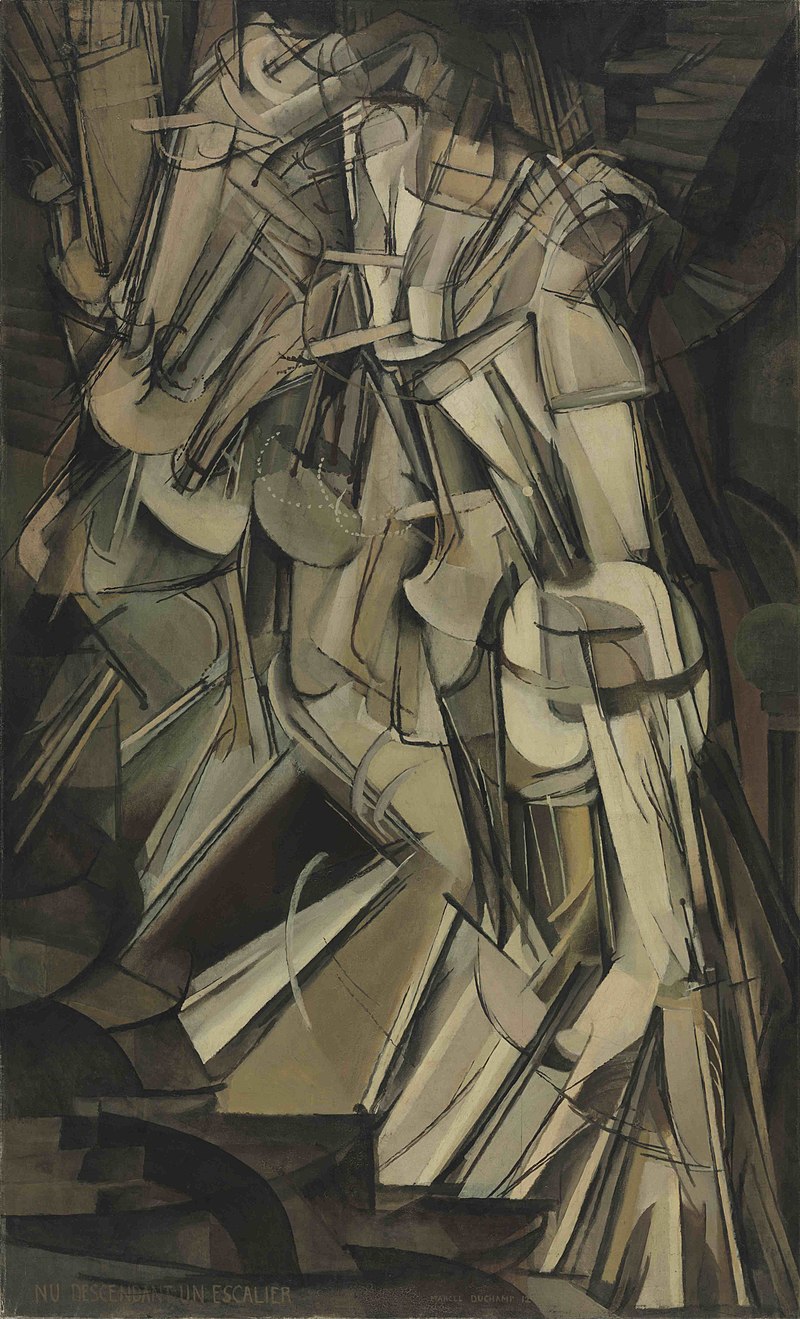
<p>People don’t always get cubist art thinking it’s just a jumble of
images deliberately goofy like a Potato Head gone wrong. But one of
the original ideas was to show different perspectives at the same
time; it kinda developed out of Muybridge and early motion picture
attempts.</p>

<p><img src="https://upload.wikimedia.org/wikipedia/en/thumb/c/c0/Duchamp_-_Nude_Descending_a_Staircase.jpg/800px-Duchamp_-_Nude_Descending_a_Staircase.jpg" alt="Duchamp's &quot;Nude Descending a Staircase&quot;" /></p>

<p>Painting time itself, like this Duchamp painting of someone walking
down stairs.</p>

<p>This misunderstanding of cubist art sometimes applies to
self-proclaimed cubist painters themselves, ilke Kasimir Malevich who
in his early days was a complete poser, a band-wagon–jumper who tried
to make cubist paintings without grokking the purpose so it looked
more like Max Headroom–style polygon images that still were only
locked in one moment of time like any old normal portrait but uglier.
Once he abandonded that misguided path he went onto make
groundbreaking concretist paintings that I love so learn the lesson
kids: do your own thing.</p>

<p>I’m a fan of cover songs because I see them as additive; a sparse
echoing haunting arrangement of “Total Eclipse of the Heart” gets all
the more richer because of how Jim Steinman’s bombastic version still
also exists. A cover evokes the original and a good cover also makes
it so that the original from then on also is enriched with the
sentiments of the cover.</p>

<p>“Girls just wanna have fun” have had so many takes over the years and
now when I hear one version I hear ‘em all. From Hazard’s nostalgic
bittersweetly celebratory stance against patriarchy, through Lauper’s
party “set us free” anthem, through Greg Haswell’s haunting cry of
frustration over lack of connection.</p>

<p>I’m writing this because I just saw Ghost’s version of “Jesus He
Knows Me”. Great song but it’s great because it has the context of
Genesis’ pitch perfect portrayal of mid-80s televangelist hypocrisy.
On its own, the new video comes across more like “the counterculture
and club scene is just full of sin; sex and drugs are bad(?), and the
punk goth kids are Christian priests in disguise(??)”, almost comes
across a li’l homophobic, whereas the original song and video was a
teardown of the entire “prosperity theology” scam along with a more
class-conscious critique and with allusions to specific, contemporary
events.</p>

<p>The song needs the orginal to give the full context of the scream of
rage that it actually is, but since covers are additive like facets on
a gem or perspectives in a cubist painting, having both versions makes
both versions better.</p>

<p>So with that in mind (what the original had that’s gone in the new
take), the new version also adds something. It comes across more as a
man struggling with what he really wants. The version with Phil
Collins unveilos the televangelists in all their smugness and comes
across as totally deliberate; the Ghost version adds a sense of how
utterly lost they really are.</p>

<p>Also, musically it kicks.</p>

        </div>
      </div>
    </content>
    <updated>2024-03-25T12:55:39+01:00</updated>
    <link href="https://idiomdrottning.org/covers-and-cubism"/>
    <author>
      <name>Idiomdrottning</name>
      <email>sandra.snan@idiomdrottning.org</email>
    </author>
    </entry>
  <entry>
    <link rel="self" href="https://idiomdrottning.org/i-only-listen-to-sad-sad-songs"/>
    <id>https://idiomdrottning.org/i-only-listen-to-sad-sad-songs</id>
    <title type="xhtml"><div xmlns="http://www.w3.org/1999/xhtml"><a href="https://idiomdrottning.org/i-only-listen-to-sad-sad-songs">I only listen to sad, sad songs</a></div></title>
    <content type="xhtml">
      <div xmlns="http://www.w3.org/1999/xhtml">
	      <div>
        

<p>I was eighteen when I first heard <cite>Only Happy When It
Rains</cite>. (I know it had been out for three years, but I never
heard Garbage until <cite>Push It</cite> came out.)</p>

<p>I should’ve heard it as soon as I was born. I could’ve saved myself 18
years of trouble.</p>

<p>There are few things as consoling as actually being sad when things
are bad. Not just sublimating, but actually validating.</p>

<p>There is this saying, attributed to 洞山良价 / Dòngshān Liángjiè (if
so, that was 1200 years ago):</p>

<blockquote>
  <p>When it’s hot, be hot. When it’s cold, be cold.</p>
</blockquote>

<p>I guess also when it’s bad, be sad. It’s so basic but sometimes so
difficult to realize. It’s easy to get tripped up and start thinking
“this is wrong, being sad is wrong, I need to stop it”. OK, now I have
<em>two</em> problems.</p>

<blockquote>
  <p>Oh come t’inganni<br />
se pensi che gl’anni<br />
non hann’ da finire!<br />
Bisogna morire.</p>
</blockquote>

        </div>
      </div>
    </content>
    <updated>2021-04-11T08:13:56+02:00</updated>
    <link href="https://idiomdrottning.org/i-only-listen-to-sad-sad-songs"/>
    <author>
      <name>Idiomdrottning</name>
      <email>sandra.snan@idiomdrottning.org</email>
    </author>
    </entry>
  <entry>
    <link rel="self" href="https://idiomdrottning.org/strat-diary"/>
    <id>https://idiomdrottning.org/strat-diary</id>
    <title type="xhtml"><div xmlns="http://www.w3.org/1999/xhtml"><a href="https://idiomdrottning.org/strat-diary">Strat Diary</a></div></title>
    <content type="xhtml">
      <div xmlns="http://www.w3.org/1999/xhtml">
	      <div>
        

<h2 id="2021-01-19">2021-01-19</h2>

<p>Watching guitar reviews for a few weeks but I’m now leaning towards
keeping my old guitar. It’s gonna be difficult to find an electric
guitar I like as much. (I also have a nylon acoustic, sweatshop made
Rivertone that was super cheap off the Cl_s Ohls_n rack but I love
everything about that guitar (except how difficult it is to mic). I am
grateful to whomever put that thing together.)</p>

<p>A non-Fender s-type, three tone sunburst, white
pickguard, maple neck my friend Lina found in a dumpster in Iceland
(where I’ve never been), I got the impression that it was outside some</p>
<blockquote>
  <p>student housing, like dorm rooms on moving day. She found it mid 00s,
so the guitar is at least that old.</p>
</blockquote>

<p>I have finally learned what words like “action”, “stall”, “bridge”,
“nut” and “pot” mean (outside of the context of playing poker).</p>

<p>Here is the sitch with this guitar.</p>

<ul>
  <li>The trem bar a.k.a. whammy bar is lost. I’ll eventually wanna get a
new one.</li>
  <li>I’m happy with the action. That’s a relief because “bad action”,
“setup action”, “adjust action” etc has been such a constant refrain
on the Internet and I didn’t know what it was so I just assumed mine
was gonna be bad and it was gonna be a schlep.</li>
  <li>There are some things about this guitar that makes me think it’s
some sorta real vintage guitar (like, it only has a threeway pickup
switch, most newer strats have at least five. And the pots don’t
push or pull. It has SSS pickups). There’s no headstock logo of any
kind. The metal plate on the back near the neck says Made in Japan.
There’s no skunk stripe and the pickup switch has no plastic handle,
it’s just metal. But the one thing that screams “cheap” is the
frets. They need filing. Every single fret on both sides is sharp
and snagging. The height is fine.</li>
  <li>The three pots need cleaning and/or replacement. They are for sure
bad.</li>
  <li>The jack and/or pickups also might need cleaning and/or replacement.
They are probably bad but… I know the pots are trash, all three.
That’s just painfully obvi.</li>
  <li>The nut is broken (the piece that holds the bass string has broken
off—that happened during my time with it) and that was a huge
problem when I had NST and a fat C string. It rattled. It works fine
for <a href="/fretting-dadfad">DADFAD</a> which is what I’m playing now.</li>
  <li>The outside of the pick guard, buttons, and pickups all need
cleaning. All the plastic parts basically, front and back. That has
been a problem since I got it. It’s basically always been gross. I’m
just bad at figuring out how to get things clean. I’ll need to look
that up.</li>
</ul>

<p>Now, we did soldering in high school and I hate it. Probably least
favorite activity. So I’ll need to ask an ex or a friend. And that
means waiting until after pandemic probably.</p>

<ul>
  <li><a href="https://www.strat-talk.com/threads/mystery-s-type-mij.559293/">Identification thread on Strat-Talk</a></li>
</ul>

<h2 id="2021-02-02">2021-02-02</h2>

<p>Last friday I cleaned out the guitar properly with soap. It’s awesome
to have the vintage, yellowed knobs and pickup covers be clean. I love
the agedness and the yellowing, I hated the dirt but now it’s clean
and nice.</p>

<p>This guitar is from the 70s, I learned (on Strat-Talk). I should tune
it up and try it out to see if nothing got busted up, broken, shorted
or corroded from the cleaning. Also the strap fell off and the guitar
fell guard down and the pots and bridge dented my floor.</p>

<p>Eventually I def need to get new pots, I wanna get new pickups and a
new jack, I wanna keep my threeway pickup switch but I want to put a
new blade cover on it. And I need to get a whammy bar.</p>

<p>This morning I was checking out a tutorial on how to fix the sharp
frets. I was hoping that was gonna something I can do on my own, but I
don’t think I can.</p>

<p>Fixing this is maybe gonna get more expensive than just getting a
Squier. I should keep a running total. But so far $0 except for
strings and a pitchkey.</p>

<h2 id="i-forgot-to-write-in-the-diary">I forgot to write in the diary</h2>

<p>A few years between now and last entry I took it to a guitar shop that
cleaned the pots. It sounds great now. It probably cost more than a
new guitar would’ve…?! But then again I would’ve had to do the same
tune up with a new guitar eventually.</p>

<h2 id="2024-08-11">2024-08-11</h2>

<p>I ws chasing down the noise issue with my guitar setup and I finally found it so here’s a note to self (although I must write this down in my paper notebook as well because I’m more likely to look there).</p>

<ol>
  <li>
    <p>On the SmplTrek, don’t have both Monitor <em>and</em> Ext Src on. One is enough, the latter is best.</p>
  </li>
  <li>
    <p>Set the gain on the rec source screen to low! Any higher sucks and is super noisy with single coil. I add gain or level with a send effect, that sounds much better, and with the input knob, I can even crank the guitar’s volume knob or the fish drive’s volume knob up. The poison turned out to be the gain setting on the rec source screen.</p>
  </li>
</ol>

<p>After trying all the other places it could’ve been (guitar volume knob, tone knob, fish drive one of five settings, and in the SmplTrek it could be one of seven places, turned out that the issue was only one of those fourteen places. That’s a relief, usually with a single coil guitar every single volume knob is a minefield with few sweet spots (that’s normally the tradeoff with single coil) but here there was only one that was bad. With that set to low I have lots of room to play around with the other settings.</p>

<p>This record is gonna suck and will probably never be released. It’s gonna go straight to /dev/null. But I do wanna try to finish it. As a learning exercise.</p>

        </div>
      </div>
    </content>
    <updated>2021-01-19T20:56:46+01:00</updated>
    <link href="https://idiomdrottning.org/strat-diary"/>
    <author>
      <name>Idiomdrottning</name>
      <email>sandra.snan@idiomdrottning.org</email>
    </author>
    </entry>
  <entry>
    <link rel="self" href="https://idiomdrottning.org/bits-pieces"/>
    <id>https://idiomdrottning.org/bits-pieces</id>
    <title type="xhtml"><div xmlns="http://www.w3.org/1999/xhtml"><a href="https://idiomdrottning.org/bits-pieces">Bits &amp; Pieces</a></div></title>
    <content type="xhtml">
      <div xmlns="http://www.w3.org/1999/xhtml">
	      <div>
        

<p>Morse code is ternary but here is an easy binary code to use next time
you’re in prison:</p>

<p><a href="https://en.wikipedia.org/wiki/Tap_code">Tap code</a></p>

<p>Only uses taps and pauses, and never sequential pauses.</p>

<p>The 5×5 grid is a pretty optimal way to keep sequences low which is
probably what you want.</p>

<p>Arguably an 8×4 box instead helps if you wanna learn ASCII at the same
time since it sorta maps to octal, i.e. “E” would be “tap
taptaptaptaptap” But, it’s 1 to 8 instead of 0 to 7.</p>

<p>We used to use just 7 bit ASCII straight up but it’s difficult to
count the number of pauses that pass sequentially. An easy finger
mnemonic for binary ASCII is to learn to count to four in binary (00,
01, 10, 11) and then use two 0-indexed 4×4 boxes (phalanges of both
hands) and the sixth bit from the right sets lowercase.</p>

<p>Speaking of bit, today I learned that it used to be a value of money
(a piece of eight) and two bits of a dollar was easy enough to figure
out, it’s a quarter. And for odd bits, since there is no 12.5 cent
coin people just used dimes. This would’ve worked well if the system
was hermetic and you could just define a dime to be half a quarter and
two dimes to be a quarter but of course they still had to interface
with the larger world. So no one would wanna give you a quarter for
two dimes.</p>

<p>Here’s R L Stevenson on the topic, in 1892:</p>

<blockquote>
  <p>In the Pacific States they have made a bolder push for complexity,
and settle their affairs by a coin that no longer exists – the bit,
or old Mexican real. The supposed value of the bit is twelve and a
half cents, eight to the dollar. When it comes to two bits, the
quarter-dollar stands for the required amount. But how about an odd
bit? The nearest coin to it is a dime, which is, short by a fifth.
That, then, is called a short bit. If you have one, you lay it
triumphantly down, and save two and a half cents. But if you have
not, and lay down a quarter, the bar-keeper or shopman calmly
tenders you a dime by way of change; and thus you have paid what is
called a long bit, and lost two and a half cents, or even, by
comparison with a short bit, five cents.</p>
</blockquote>

<p>This reminds me of how in the Arabian Nights there are dirhams and
dinars and they are both in use but it’s not always straight-forward
to exchange between them.</p>

<p>It’s a bit odd that binary bits are called bits, i.e. eighths, they
should be called halves since binary is a system based on halving. Why
the heck’s there eighths?</p>

<p>Solderpunk writes in to add:</p>

<blockquote>
  <p>I stumbled upon the answer to a question I’d never actually asked
before, but in retrospect should have been obvious - why on Earth
are octaves called octaves, if “oct” means eight? Okay, sure, eight
is a power of two, but why not name them something more directly
related to the basic concept, which is all about halving or
doubling? The answer, as you may well already be aware, is that
when - and only when! - considering a heptatonic scale, you need to
go up/down eight consecutive notes to go up/down an octave. The name
makes no sense from the perspective of scales of any degree other
than seven. Of course, this is by no means the only case of “scale
hegemony” in music terminology/notation - just one I hadn’t noticed
before and one whose discovery just happened to coincide in time
alarmingly well with your post!</p>
</blockquote>

        </div>
      </div>
    </content>
    <updated>2021-01-12T00:20:01+01:00</updated>
    <link href="https://idiomdrottning.org/bits-pieces"/>
    <author>
      <name>Idiomdrottning</name>
      <email>sandra.snan@idiomdrottning.org</email>
    </author>
    </entry>
  <entry>
    <link rel="self" href="https://idiomdrottning.org/dx7-old"/>
    <id>https://idiomdrottning.org/dx7-old</id>
    <title type="xhtml"><div xmlns="http://www.w3.org/1999/xhtml"><a href="https://idiomdrottning.org/dx7-old">DX7 Patches — old edition</a></div></title>
    <content type="xhtml">
      <div xmlns="http://www.w3.org/1999/xhtml">
	      <div>
        

<p>Here are the DX7 patches I made back in the day. I almost feel bad for
releasing them as CC-BY-SA 4.0 (which I am hereby doing) because they
feel so personal; the good ones that is. Some of them are unusably bad
to the point that I don’t know why I kept them, but weepfriend is the
quintessential Idiomdrottning sound, ghostknock is great for minor
chords, and mellanchor can add its characteristics to a song♥︎ And
there are a handful that I don’t remember using but that do inspire me
now—like snotty (uh, you can rename these patches if you want).</p>

<p>Please enjoy them♥︎</p>

<ul>
  <li><a href="/idiomdrottning-classix.dx7">idiomdrottning-classix.dx7</a></li>
</ul>

<h2 id="my-history-with-the-dx7">My history with the DX7</h2>

<p>When I was in a band I didn’t know how to make music. I just wrote the
lyrics, sometimes hummed a melody. The keyboardist in our band used
and loved a DX7, both as a midi keyboard (it’s fantastic) and (more
often) as an instrument in its own right. When the venue had a piano
we’d use that instead, but, he did like the DX7 and he would talk
about famous songs where it was used or mentioned in lyrics.</p>

<p>Two years or so after the band’s dissolution, I went to a PureData
workshop and the demo exercise was a simple one-operator FM synth. A
few weeks after that, I visited Kymatica in his studio and he taught
me how to make patches on the TX7. We spent a full day in his studio
making patches (I didn’t save any of them, it was just to learn).
(Reading about it now, it seems like you can’t make patches directly
on TX7 but looking at photos of the PR-7 separate programming unit,
that looks familiar.)</p>

<p>I had Hexter at home so I could start making patches right away. At
first I used txedit which was a TUI app that had the huge drawback
that I never figured out how to load existing patches—every single
sound had to be made from scratch and I had to get it right or I’d
never be able to edit it. Nowaways Hexter has a patch editing mode
which I use instead—because I can actually edit and start from
existing patches.♥︎</p>

<p>Long story short, these were all made for and tested with Hexter
rather than the original.</p>

        </div>
      </div>
    </content>
    <updated>2021-01-03T09:50:06+01:00</updated>
    <link href="https://idiomdrottning.org/dx7-old"/>
    <author>
      <name>Idiomdrottning</name>
      <email>sandra.snan@idiomdrottning.org</email>
    </author>
    </entry>
  <entry>
    <link rel="self" href="https://idiomdrottning.org/poison-soda"/>
    <id>https://idiomdrottning.org/poison-soda</id>
    <title type="xhtml"><div xmlns="http://www.w3.org/1999/xhtml"><a href="https://idiomdrottning.org/poison-soda">Poison Soda</a></div></title>
    <content type="xhtml">
      <div xmlns="http://www.w3.org/1999/xhtml">
	      <div>
        

<p>Making music for the first time in a decade!</p>

<ol>
  <li><a href="/01-idiomdrottning-skipping-the-tens.opus">Skipping the 10’s</a></li>
  <li><a href="/02-idiomdrottning-comedienne.opus">Comedienne</a></li>
  <li><a href="/03-idiomdrottning-hollis_brown.opus">Hollis Brown</a></li>
  <li><a href="/04-idiomdrottning-dansa_min_hjalte_for_snart_ska_du_do.opus">Dansa min hjälte för snart ska du dö</a></li>
  <li><a href="/05-idiomdrottning-kiln_fired_brick_silica.opus">Kiln-fired brick silica</a></li>
  <li><a href="/06-idiomdrottning-ghosts_outside_doors_and_windows.opus">Ghosts outside doors and windows</a></li>
  <li><a href="/07-idiomdrottning-promises_promises.opus">Promises, promises</a></li>
</ol>

        </div>
      </div>
    </content>
    <updated>2021-01-01T12:12:22+01:00</updated>
    <link href="https://idiomdrottning.org/poison-soda"/>
    <author>
      <name>Idiomdrottning</name>
      <email>sandra.snan@idiomdrottning.org</email>
    </author>
    </entry>
  <entry>
    <link rel="self" href="https://idiomdrottning.org/fretting-sharp"/>
    <id>https://idiomdrottning.org/fretting-sharp</id>
    <title type="xhtml"><div xmlns="http://www.w3.org/1999/xhtml"><a href="https://idiomdrottning.org/fretting-sharp">Guitar fretting patterns with DADF♯AD tuning</a></div></title>
    <content type="xhtml">
      <div xmlns="http://www.w3.org/1999/xhtml">
	      <div>
        

<p>As a follow up
to <a href="/fretting-dadfad">Guitar fretting patterns with DADFAD tuning</a>
here are some more patterns, for when you tune the F up to F♯.</p>

<h2 id="the-three-new-patterns">The three new patterns</h2>

<p>Dots (•) indicate on-scale fret positions. Open strings are also always on scale with these patterns.</p>

<h3 id="the--diamond-sharp-pattern">The ♢♯ (diamond sharp) pattern</h3>

<table>
  <thead>
    <tr>
      <th>String</th>
      <th>1</th>
      <th>2</th>
      <th>3</th>
      <th>4</th>
      <th>5</th>
    </tr>
  </thead>
  <tbody>
    <tr>
      <td>D</td>
      <td> </td>
      <td>•</td>
      <td> </td>
      <td>•</td>
      <td>•</td>
    </tr>
    <tr>
      <td>A</td>
      <td> </td>
      <td>•</td>
      <td>•</td>
      <td> </td>
      <td> </td>
    </tr>
    <tr>
      <td>F♯</td>
      <td>•</td>
      <td> </td>
      <td> </td>
      <td> </td>
      <td> </td>
    </tr>
    <tr>
      <td>D</td>
      <td> </td>
      <td>•</td>
      <td> </td>
      <td> </td>
      <td> </td>
    </tr>
    <tr>
      <td>A</td>
      <td> </td>
      <td>•</td>
      <td>•</td>
      <td> </td>
      <td> </td>
    </tr>
    <tr>
      <td>D</td>
      <td> </td>
      <td>•</td>
      <td> </td>
      <td>•</td>
      <td>•</td>
    </tr>
  </tbody>
</table>

<h3 id="the--heart-sharp-pattern">The ♡♯ (heart sharp) pattern</h3>

<table>
  <thead>
    <tr>
      <th>String</th>
      <th>1</th>
      <th>2</th>
      <th>3</th>
      <th>4</th>
      <th>5</th>
    </tr>
  </thead>
  <tbody>
    <tr>
      <td>D</td>
      <td> </td>
      <td>•</td>
      <td> </td>
      <td>•</td>
      <td>•</td>
    </tr>
    <tr>
      <td>A</td>
      <td> </td>
      <td>•</td>
      <td> </td>
      <td>•</td>
      <td> </td>
    </tr>
    <tr>
      <td>F♯</td>
      <td>•</td>
      <td> </td>
      <td> </td>
      <td> </td>
      <td> </td>
    </tr>
    <tr>
      <td>D</td>
      <td> </td>
      <td>•</td>
      <td> </td>
      <td> </td>
      <td> </td>
    </tr>
    <tr>
      <td>A</td>
      <td> </td>
      <td>•</td>
      <td> </td>
      <td>•</td>
      <td> </td>
    </tr>
    <tr>
      <td>D</td>
      <td> </td>
      <td>•</td>
      <td> </td>
      <td>•</td>
      <td>•</td>
    </tr>
  </tbody>
</table>

<h3 id="the--clubs-sharp-pattern">The ♧♯ (clubs sharp) pattern</h3>

<table>
  <thead>
    <tr>
      <th>String</th>
      <th>1</th>
      <th>2</th>
      <th>3</th>
      <th>4</th>
      <th>5</th>
    </tr>
  </thead>
  <tbody>
    <tr>
      <td>D</td>
      <td> </td>
      <td>•</td>
      <td> </td>
      <td>•</td>
      <td>•</td>
    </tr>
    <tr>
      <td>A</td>
      <td> </td>
      <td>•</td>
      <td> </td>
      <td>•</td>
      <td> </td>
    </tr>
    <tr>
      <td>F♯</td>
      <td> </td>
      <td>•</td>
      <td> </td>
      <td> </td>
      <td> </td>
    </tr>
    <tr>
      <td>D</td>
      <td> </td>
      <td>•</td>
      <td> </td>
      <td> </td>
      <td> </td>
    </tr>
    <tr>
      <td>A</td>
      <td> </td>
      <td>•</td>
      <td> </td>
      <td>•</td>
      <td> </td>
    </tr>
    <tr>
      <td>D</td>
      <td> </td>
      <td>•</td>
      <td> </td>
      <td>•</td>
      <td>•</td>
    </tr>
  </tbody>
</table>

<h2 id="signature--capopattern">Signature → Capo+Pattern</h2>

<p>A zero indicates no capo. A number followed by a suit indicator indicates a capo at that fret and which fretting pattern to use.</p>

<table>
  <thead>
    <tr>
      <th>signature</th>
      <th>capo+pattern</th>
    </tr>
  </thead>
  <tbody>
    <tr>
      <td>♮</td>
      <td>3♧♯,5♢♯</td>
    </tr>
    <tr>
      <td>♭</td>
      <td>3♡♯</td>
    </tr>
    <tr>
      <td>♯</td>
      <td>0♢♯,5♡♯</td>
    </tr>
    <tr>
      <td>♭♭</td>
      <td>1♧♯,3♢♯</td>
    </tr>
    <tr>
      <td>♯♯</td>
      <td>0♡♯,5♧♯</td>
    </tr>
    <tr>
      <td>♭♭♭</td>
      <td>1♡♯,6♧♯</td>
    </tr>
    <tr>
      <td>♯♯♯</td>
      <td>0♧♯,2♢♯</td>
    </tr>
    <tr>
      <td>♭♭♭♭</td>
      <td>1♢♯,6♡♯</td>
    </tr>
    <tr>
      <td>♯♯♯♯</td>
      <td>2♡♯</td>
    </tr>
    <tr>
      <td>♭♭♭♭♭</td>
      <td>6♢♯</td>
    </tr>
    <tr>
      <td>♯♯♯♯♯</td>
      <td>2♧♯,4♢♯</td>
    </tr>
    <tr>
      <td>♭♭♭♭♭♭/♯♯♯♯♯♯</td>
      <td>4♧♯</td>
    </tr>
  </tbody>
</table>

<p>When there are alternatives, use the lower capo number for a fuller sound or the higher capo number for a brighter sound.</p>

<p>You can additionally put a partial capo on the bass strings (or retune them).</p>

<h2 id="capopattern--signature">Capo+Pattern → Signature</h2>

<table>
  <thead>
    <tr>
      <th>capo</th>
      <th>♢♯</th>
      <th>♡♯</th>
      <th>♧♯</th>
    </tr>
  </thead>
  <tbody>
    <tr>
      <td>0</td>
      <td>♯</td>
      <td>♯♯</td>
      <td>♯♯♯</td>
    </tr>
    <tr>
      <td>1</td>
      <td>♭♭♭♭</td>
      <td>♭♭♭</td>
      <td>♭♭</td>
    </tr>
    <tr>
      <td>2</td>
      <td>♯♯♯</td>
      <td>♯♯♯♯</td>
      <td>♯♯♯♯♯</td>
    </tr>
    <tr>
      <td>3</td>
      <td>♭♭</td>
      <td>♭</td>
      <td>♮</td>
    </tr>
    <tr>
      <td>4</td>
      <td>♯♯♯♯♯</td>
      <td>♯♯♯♯♯♯</td>
      <td>♭♭♭♭♭♭/♯♯♯♯♯♯♯</td>
    </tr>
    <tr>
      <td>5</td>
      <td>♮</td>
      <td>♯</td>
      <td>♯♯</td>
    </tr>
    <tr>
      <td>6</td>
      <td>♭♭♭♭♭</td>
      <td>♭♭♭♭</td>
      <td>♭♭♭</td>
    </tr>
  </tbody>
</table>

<h2 id="together-with-dadfad">Together with DADFAD</h2>

<p>Combining these two tunings (maybe with a pitch-key on F/F♯, or just
with a good ear and quick fingers) and six patterns gives you the full
circle of fifths within the first two frets of capo.</p>

<table>
  <thead>
    <tr>
      <th>capo</th>
      <th>♦</th>
      <th>♥︎</th>
      <th>♣</th>
      <th>♢♯</th>
      <th>♡♯</th>
      <th>♧♯</th>
    </tr>
  </thead>
  <tbody>
    <tr>
      <td>0</td>
      <td>♮</td>
      <td>♭</td>
      <td>♭♭</td>
      <td>♯</td>
      <td>♯♯</td>
      <td>♯♯♯</td>
    </tr>
    <tr>
      <td>1</td>
      <td>♭♭♭♭♭</td>
      <td>♭♭♭♭♭♭/♯♯♯♯♯♯</td>
      <td>♯♯♯♯♯</td>
      <td>♭♭♭♭</td>
      <td>♭♭♭</td>
      <td>♭♭</td>
    </tr>
    <tr>
      <td>2</td>
      <td>♯♯</td>
      <td>♯</td>
      <td>♮</td>
      <td>♯♯♯</td>
      <td>♯♯♯♯</td>
      <td>♯♯♯♯♯</td>
    </tr>
    <tr>
      <td>3</td>
      <td>♭♭♭</td>
      <td>♭♭♭♭</td>
      <td>♭♭♭♭♭</td>
      <td>♭♭</td>
      <td>♭</td>
      <td>♮</td>
    </tr>
    <tr>
      <td>4</td>
      <td>♯♯♯♯</td>
      <td>♯♯♯</td>
      <td>♯♯</td>
      <td>♯♯♯♯♯</td>
      <td>♯♯♯♯♯♯</td>
      <td>♭♭♭♭♭♭/♯♯♯♯♯♯♯</td>
    </tr>
    <tr>
      <td>5</td>
      <td>♭</td>
      <td>♭♭</td>
      <td>♭♭♭</td>
      <td>♮</td>
      <td>♯</td>
      <td>♯♯</td>
    </tr>
    <tr>
      <td>6</td>
      <td>♭♭♭♭♭♭/♯♯♯♯♯♯</td>
      <td>♯♯♯♯♯</td>
      <td>♯♯♯♯</td>
      <td>♭♭♭♭♭</td>
      <td>♭♭♭♭</td>
      <td>♭♭♭</td>
    </tr>
  </tbody>
</table>

<table>
  <thead>
    <tr>
      <th>signature</th>
      <th>capo+pattern</th>
    </tr>
  </thead>
  <tbody>
    <tr>
      <td>♮</td>
      <td>0♦,2♣,3♧♯,5♢♯</td>
    </tr>
    <tr>
      <td>♭</td>
      <td>0♥︎,3♡♯,5♦</td>
    </tr>
    <tr>
      <td>♯</td>
      <td>0♢♯,2♥︎,5♡♯</td>
    </tr>
    <tr>
      <td>♭♭</td>
      <td>0♣,1♧♯,3♢♯,5♥︎</td>
    </tr>
    <tr>
      <td>♯♯</td>
      <td>0♡♯,2♦,4♣,5♧♯</td>
    </tr>
    <tr>
      <td>♭♭♭</td>
      <td>1♡♯,3♦,5♣,6♧♯</td>
    </tr>
    <tr>
      <td>♯♯♯</td>
      <td>0♧♯,2♢♯,4♥︎</td>
    </tr>
    <tr>
      <td>♭♭♭♭</td>
      <td>1♢♯,3♥︎,6♡♯</td>
    </tr>
    <tr>
      <td>♯♯♯♯</td>
      <td>2♡♯,4♦,6♣</td>
    </tr>
    <tr>
      <td>♭♭♭♭♭</td>
      <td>1♦,3♣,6♢♯</td>
    </tr>
    <tr>
      <td>♯♯♯♯♯</td>
      <td>1♣,2♧♯,4♢♯,6♥︎</td>
    </tr>
    <tr>
      <td>♭♭♭♭♭♭/♯♯♯♯♯♯</td>
      <td>1♥︎,4♧♯,6♦</td>
    </tr>
  </tbody>
</table>

<h2 id="demo">Demo</h2>

<p>Here is a demo of the ♡♯ pattern:</p>

<p><a href="/love-minus-zero.mp4">Love Minus Zero</a></p>

        </div>
      </div>
    </content>
    <updated>2020-11-17T13:36:19+01:00</updated>
    <link href="https://idiomdrottning.org/fretting-sharp"/>
    <author>
      <name>Idiomdrottning</name>
      <email>sandra.snan@idiomdrottning.org</email>
    </author>
    </entry>
  <entry>
    <link rel="self" href="https://idiomdrottning.org/fretting-dadfad"/>
    <id>https://idiomdrottning.org/fretting-dadfad</id>
    <title type="xhtml"><div xmlns="http://www.w3.org/1999/xhtml"><a href="https://idiomdrottning.org/fretting-dadfad">Guitar fretting patterns with DADFAD tuning</a></div></title>
    <content type="xhtml">
      <div xmlns="http://www.w3.org/1999/xhtml">
	      <div>
        

<h2 id="the-three-patterns">The three patterns</h2>

<p>Dots (•) indicate on-scale fret positions. Open strings are also always on scale with these patterns.</p>

<h3 id="the--diamond-pattern">The ♦ (diamond) pattern</h3>

<table>
  <thead>
    <tr>
      <th>String</th>
      <th>1</th>
      <th>2</th>
      <th>3</th>
      <th>4</th>
      <th>5</th>
    </tr>
  </thead>
  <tbody>
    <tr>
      <td>D</td>
      <td> </td>
      <td>•</td>
      <td>•</td>
      <td> </td>
      <td>•</td>
    </tr>
    <tr>
      <td>A</td>
      <td> </td>
      <td>•</td>
      <td>•</td>
      <td> </td>
      <td> </td>
    </tr>
    <tr>
      <td>F</td>
      <td> </td>
      <td>•</td>
      <td> </td>
      <td> </td>
      <td> </td>
    </tr>
    <tr>
      <td>D</td>
      <td> </td>
      <td>•</td>
      <td> </td>
      <td> </td>
      <td> </td>
    </tr>
    <tr>
      <td>A</td>
      <td> </td>
      <td>•</td>
      <td>•</td>
      <td> </td>
      <td> </td>
    </tr>
    <tr>
      <td>D</td>
      <td> </td>
      <td>•</td>
      <td>•</td>
      <td> </td>
      <td>•</td>
    </tr>
  </tbody>
</table>

<h3 id="the-︎-heart-pattern">The ♥︎ (heart) pattern</h3>

<p>My favorite! D minor, or an E minor with a capo on second. Use index finger and pinkie finger on the bright A string, and then middle finger and ringer finger on middle D and on F respectively. Great pattern because you don’t have to dip into the bass strings for the root note.</p>

<table>
  <thead>
    <tr>
      <th>String</th>
      <th>1</th>
      <th>2</th>
      <th>3</th>
      <th>4</th>
      <th>5</th>
    </tr>
  </thead>
  <tbody>
    <tr>
      <td>D</td>
      <td> </td>
      <td>•</td>
      <td>•</td>
      <td> </td>
      <td>•</td>
    </tr>
    <tr>
      <td>A</td>
      <td>•</td>
      <td> </td>
      <td>•</td>
      <td> </td>
      <td> </td>
    </tr>
    <tr>
      <td>F</td>
      <td> </td>
      <td>•</td>
      <td> </td>
      <td> </td>
      <td> </td>
    </tr>
    <tr>
      <td>D</td>
      <td> </td>
      <td>•</td>
      <td> </td>
      <td> </td>
      <td> </td>
    </tr>
    <tr>
      <td>A</td>
      <td>•</td>
      <td> </td>
      <td>•</td>
      <td> </td>
      <td> </td>
    </tr>
    <tr>
      <td>D</td>
      <td> </td>
      <td>•</td>
      <td>•</td>
      <td> </td>
      <td>•</td>
    </tr>
  </tbody>
</table>

<h3 id="the--clubs-pattern">The ♣ (clubs) pattern</h3>

<table>
  <thead>
    <tr>
      <th>String</th>
      <th>1</th>
      <th>2</th>
      <th>3</th>
      <th>4</th>
      <th>5</th>
    </tr>
  </thead>
  <tbody>
    <tr>
      <td>D</td>
      <td>•</td>
      <td> </td>
      <td>•</td>
      <td> </td>
      <td>•</td>
    </tr>
    <tr>
      <td>A</td>
      <td>•</td>
      <td> </td>
      <td>•</td>
      <td> </td>
      <td> </td>
    </tr>
    <tr>
      <td>F</td>
      <td> </td>
      <td>•</td>
      <td> </td>
      <td> </td>
      <td> </td>
    </tr>
    <tr>
      <td>D</td>
      <td>•</td>
      <td> </td>
      <td> </td>
      <td> </td>
      <td> </td>
    </tr>
    <tr>
      <td>A</td>
      <td>•</td>
      <td> </td>
      <td>•</td>
      <td> </td>
      <td> </td>
    </tr>
    <tr>
      <td>D</td>
      <td>•</td>
      <td> </td>
      <td>•</td>
      <td> </td>
      <td>•</td>
    </tr>
  </tbody>
</table>

<h2 id="signature--capopattern">Signature → Capo+Pattern</h2>

<p>A zero indicates no capo. A number followed by a suit indicator indicates a capo at that fret and which fretting pattern to use.</p>

<table>
  <thead>
    <tr>
      <th>signature</th>
      <th>capo+pattern</th>
    </tr>
  </thead>
  <tbody>
    <tr>
      <td>♮</td>
      <td>0♦,2♣</td>
    </tr>
    <tr>
      <td>♭</td>
      <td>0♥︎,5♦</td>
    </tr>
    <tr>
      <td>♯</td>
      <td>2♥︎</td>
    </tr>
    <tr>
      <td>♭♭</td>
      <td>0♣,5♥︎</td>
    </tr>
    <tr>
      <td>♯♯</td>
      <td>2♦,4♣</td>
    </tr>
    <tr>
      <td>♭♭♭</td>
      <td>3♦,5♣</td>
    </tr>
    <tr>
      <td>♯♯♯</td>
      <td>4♥︎</td>
    </tr>
    <tr>
      <td>♭♭♭♭</td>
      <td>3♥︎</td>
    </tr>
    <tr>
      <td>♯♯♯♯</td>
      <td>4♦,6♣</td>
    </tr>
    <tr>
      <td>♭♭♭♭♭</td>
      <td>1♦,3♣</td>
    </tr>
    <tr>
      <td>♯♯♯♯♯</td>
      <td>1♣,6♥︎</td>
    </tr>
    <tr>
      <td>♭♭♭♭♭♭/♯♯♯♯♯♯</td>
      <td>1♥︎, 6♦</td>
    </tr>
  </tbody>
</table>

<p>When there are alternatives, use the lower capo number for a fuller sound or the higher capo number for a brighter sound.</p>

<p>You can additionally put a partial capo on the bass strings (or retune them).</p>

<h2 id="capopattern--signature">Capo+Pattern → Signature</h2>

<table>
  <thead>
    <tr>
      <th>capo</th>
      <th>♦</th>
      <th>♥︎</th>
      <th>♣</th>
    </tr>
  </thead>
  <tbody>
    <tr>
      <td>0</td>
      <td>♮</td>
      <td>♭</td>
      <td>♭♭</td>
    </tr>
    <tr>
      <td>1</td>
      <td>♭♭♭♭♭</td>
      <td>♭♭♭♭♭♭/♯♯♯♯♯♯</td>
      <td>♯♯♯♯♯</td>
    </tr>
    <tr>
      <td>2</td>
      <td>♯♯</td>
      <td>♯</td>
      <td>♮</td>
    </tr>
    <tr>
      <td>3</td>
      <td>♭♭♭</td>
      <td>♭♭♭♭</td>
      <td>♭♭♭♭♭</td>
    </tr>
    <tr>
      <td>4</td>
      <td>♯♯♯♯</td>
      <td>♯♯♯</td>
      <td>♯♯</td>
    </tr>
    <tr>
      <td>5</td>
      <td>♭</td>
      <td>♭♭</td>
      <td>♭♭♭</td>
    </tr>
    <tr>
      <td>6</td>
      <td>♭♭♭♭♭♭/♯♯♯♯♯♯</td>
      <td>♯♯♯♯♯</td>
      <td>♯♯♯♯</td>
    </tr>
  </tbody>
</table>

<p>If you have an easy means of tuning the F to F♯, you can also take a
look
at <a href="/fretting-sharp">Guitar fretting patterns with DADF♯AD tuning</a> for
three more patterns.</p>

        </div>
      </div>
    </content>
    <updated>2020-06-07T17:20:30+02:00</updated>
    <link href="https://idiomdrottning.org/fretting-dadfad"/>
    <author>
      <name>Idiomdrottning</name>
      <email>sandra.snan@idiomdrottning.org</email>
    </author>
    </entry>
</feed>